321 or 200 Bailey panel: what actually changes on site
Both systems are sold as “Bailey”, and both are assembled from panels, transoms and pins. The difference shows up in the deck you get, the plant you need, and how the bridge reaches the far bank.
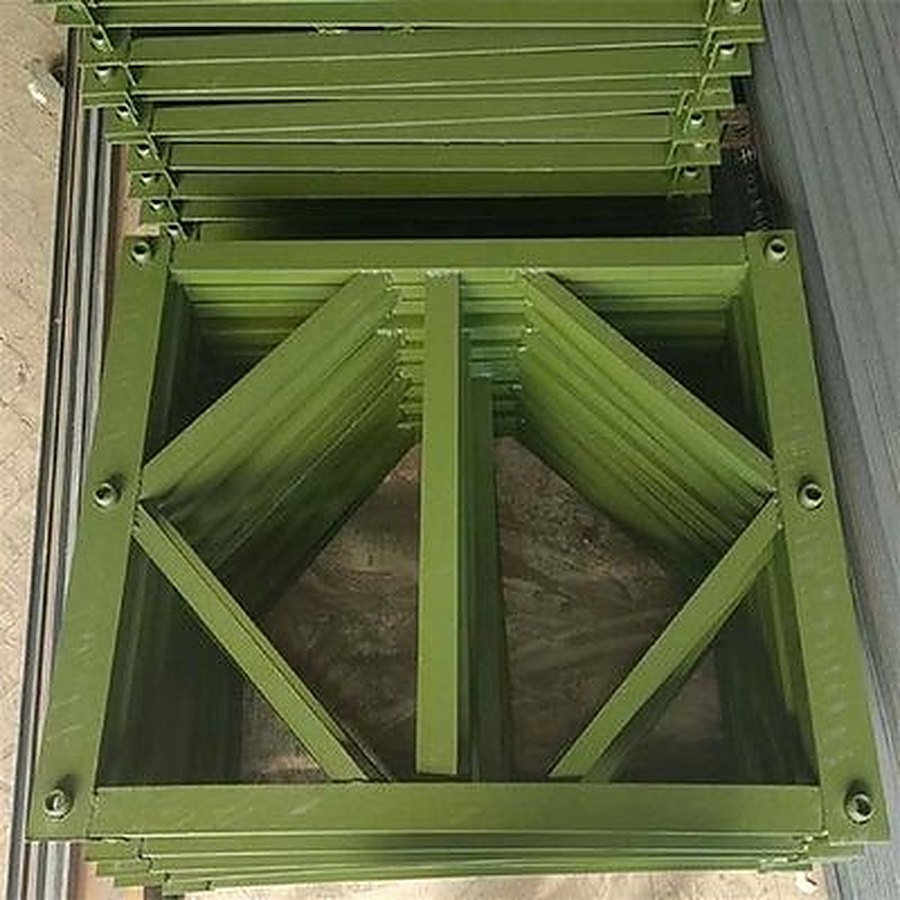
Buyers often ask for “Bailey bridge panels” without specifying the type. The two common families — 321 and 200 — are not interchangeable, and choosing the wrong one changes the crane, the haulage and sometimes the abutment.
Panel depth sets the deck thickness
The deeper panel carries more for the same number of truss lines, so a 321 bridge reaches a given span with a shallower structure than a lighter panel would need. That matters where headroom under the bridge is fixed — a flood relief opening, a site access road over an existing culvert, or a temporary crossing that must not sit proud of the approach.
A lighter panel wins the other way: it is easier to handle without a large crane, and it suits pedestrian access, pipe crossings and light plant where the load class is modest.
Deck width follows the transom, not the panel
The panel gives you the truss; the transom gives you the width. Single-lane, double-lane and walkway configurations are all built from the same panel family, with different transom lengths and decking. If the requirement is a segregated walkway, that is a transom and railing decision, not a reason to change panel type.
How it gets to the far side
Three erection methods drive the choice:
- Crane erection — panels lifted in pre-assembled sections. Lighter panels mean smaller lifts and a smaller crane.
- Launching — the bridge is pushed across on rollers. Panel stiffness and joint tolerances decide how smoothly it launches.
- Floating plant — sections assembled on a barge. Here handling weight is less critical than the connection detail.
Accessories are where budgets drift
Panels are the visible cost. The budget usually moves in the accessories: transoms, sway braces, decking, railing posts, pins, and the launching nose. A quotation that prices panels only is not comparable with one that prices a complete set — ask for the bill of materials per span.
A simple way to decide
- Vehicle crossing, fixed headroom, repeated use: the deeper panel family, with a proper launching or crane plan.
- Pedestrian, pipe or light-plant access: the lighter panel family, assembled by hand or small crane.
- Mixed package on a bridge project: keep one family for the whole site so pins, transoms and spares stay common.
Whichever way it goes, confirm the panel drawing, the load class and the deck width against the maker's data before the order is placed — and ask for the packing list, because a missing pin box stops a launch just as effectively as a missing panel.
Related notes
Working on something similar?
Send the drawing and the port. We reply with an itemised quotation and a preliminary loading plan.
Request a quoteSee the package behind this note.
The Haicang Aoguan crossing, photographed from the pile heads to the barrier line.